The most convenient route from the coast to the terminal is always the brighton to gatwick train, or so the traditional travel logic suggests. However, for the 15% of passengers who faced service disruptions on the Brighton Main Line over the last 12 months, that assumption often leads to a frantic dash for a replacement bus. You likely agree that there’s nothing more draining than navigating a packed commuter carriage with heavy suitcases while worrying if a sudden rail strike will make you miss your flight.
We’re here to ensure your journey is handled with professional precision. This comparison guide explores the most efficient ways to travel to Gatwick in 2026, weighing up train schedules and hidden station costs against the reliability of a private transfer. You’ll discover how to secure the best value for your specific group size and ensure you arrive at the correct terminal with time to spare. We’ll break down the latest rail pricing and explain why a fixed-price door-to-door service is often the most stress-free choice for your schedule.
Key Takeaways
- Learn how to navigate the 2026 UK rail fare system to secure the best value between peak and off-peak travel periods.
- Compare the total cost of a brighton to gatwick train journey against private hire, factoring in hidden expenses such as station parking and local taxi fares.
- Master the logistics of Gatwick’s North and South terminals to ensure a seamless transition from the station to your check-in desk.
- Identify why fixed-price private transfers provide a dependable alternative to the rail network during periods of industrial action and scheduled engineering works.
- Determine the most cost-effective and stress-free transport solution for families and groups travelling with heavy luggage.
Navigating the Brighton to Gatwick Train Route in 2026
The brighton to gatwick train remains the primary link for the 28 mile journey between the South Coast and London’s second largest airport. This stretch forms a critical part of the Brighton Main Line, one of the most heavily utilised rail corridors in the United Kingdom. In 2026, travellers must account for increased passenger numbers, as Gatwick’s capacity continues to expand toward 50 million passengers annually. While the rail link is efficient, it’s a station-to-station service. This means your journey doesn’t start at the platform; you must still factor in the transit from your home or hotel to Brighton Station. This distinction is vital for those carrying heavy luggage or travelling with families, where a door-to-door service often proves more reliable.
Planning your travel in 2026 requires more than just showing up. Network Rail frequently schedules essential maintenance, particularly on weekends. Always check the National Rail Enquiries website 48 hours before departure to avoid replacement bus services that can double your travel time. Reliable travel depends on knowing which service to board and when to avoid the crowds.
Key Operators: Southern vs. Thameslink
Southern Railway and Thameslink provide the bulk of the services on this route. Southern typically runs trains toward London Victoria, while Thameslink offers 24/7 cross-London routes. If you’ve got an early flight, Thameslink is your only rail option during the small hours. Both operators provide dedicated luggage racks, though these often reach capacity on the brighton to gatwick train during morning peaks between 07:00 and 09:00. Southern trains often feature more traditional seating layouts, whereas Thameslink carriages are designed for higher capacity with more standing room, which isn’t always ideal for a relaxing start to a holiday.
The Journey from Brighton Station
Brighton Station is a terminus with eight platforms. You’ll usually find Gatwick-bound services departing from platforms 1, 2, or 3, but always check the overhead screens as you enter the main concourse. The station layout is straightforward, but the walk from the ticket barriers to the furthest platforms can take several minutes.
- Fast Services: These take approximately 28 minutes and stop only at Three Bridges or Burgess Hill.
- Stopping Services: These can take up to 45 minutes, calling at most stations along the route including Hassocks and Balcombe.
Don’t just board the first train you see. Check the final destination on the departure board. Trains headed to Bedford, Cambridge, or London Victoria will all stop at Gatwick Airport, but their arrival times vary significantly. Using a fast service saves nearly 20 minutes, which can be the difference between a relaxed check-in and a rushed dash to the security gate.
Understanding Train Times, Fares, and Ticket Types
Managing your journey on a brighton to gatwick train requires a clear strategy to avoid overpaying. In 2026, the UK rail fare system remains tiered based on flexibility and timing. Advance tickets represent the best value, with prices starting at £11.10 for single journeys when booked via the Southern or Thameslink websites at least 12 weeks before travel. These tickets are tied to a specific departure, so they’re most suitable for travellers with fixed flight times who don’t mind committing to a set schedule.
For those who prefer flexibility, “tap and pay” using contactless cards or mobile devices is now the standard across the network. This method removes the need for paper tickets but usually charges the standard Peak or Off-Peak rate. You should check the official Gatwick Airport transport options to compare how these rail costs align with your total travel budget. Peak fares apply from 06:30 to 09:30 and 16:00 to 19:00 on weekdays, significantly increasing the cost for commuters and early flyers alike. Using contactless during these windows will automatically deduct the higher fare from your account.
Fare Breakdown and Savings
Anytime Singles provide the ultimate flexibility, allowing you to board any service on your chosen date. However, they’re the most expensive option. Off-Peak Day Returns are a more sensible choice if your travel falls outside the morning rush. You can save 34% on your fare by using a National Railcard, which is a vital tool for frequent travellers. If you’re travelling in a group of three to nine adults, GroupSave automatically applies a one-third discount to Off-Peak tickets. This often makes the train a competitive choice for families compared to other transport modes.
2026 Timetable and Frequency
The Brighton to Gatwick route is one of the busiest in the South East, ensuring high frequency throughout the day. During peak hours, up to eight trains depart every hour, meaning a missed connection rarely results in a long wait at the station. The first direct service typically leaves Brighton at 03:54, reaching the airport by 04:24. This is a popular choice for those catching the first wave of European departures. The final direct service usually departs at 23:32, though late-night travellers should verify schedules on the National Rail app for any planned engineering works.
While the train is frequent, managing multiple suitcases on a busy platform or during a service disruption can be challenging. A professional airport transfer offers a seamless, door-to-door alternative for those with heavy luggage or larger groups who want to avoid the unpredictability of the rail network. Using live departure apps is essential to monitor platform changes, as Gatwick services can depart from several different platforms at Brighton station depending on the operator.
Train vs. Taxi: A Direct Comparison of Cost and Convenience
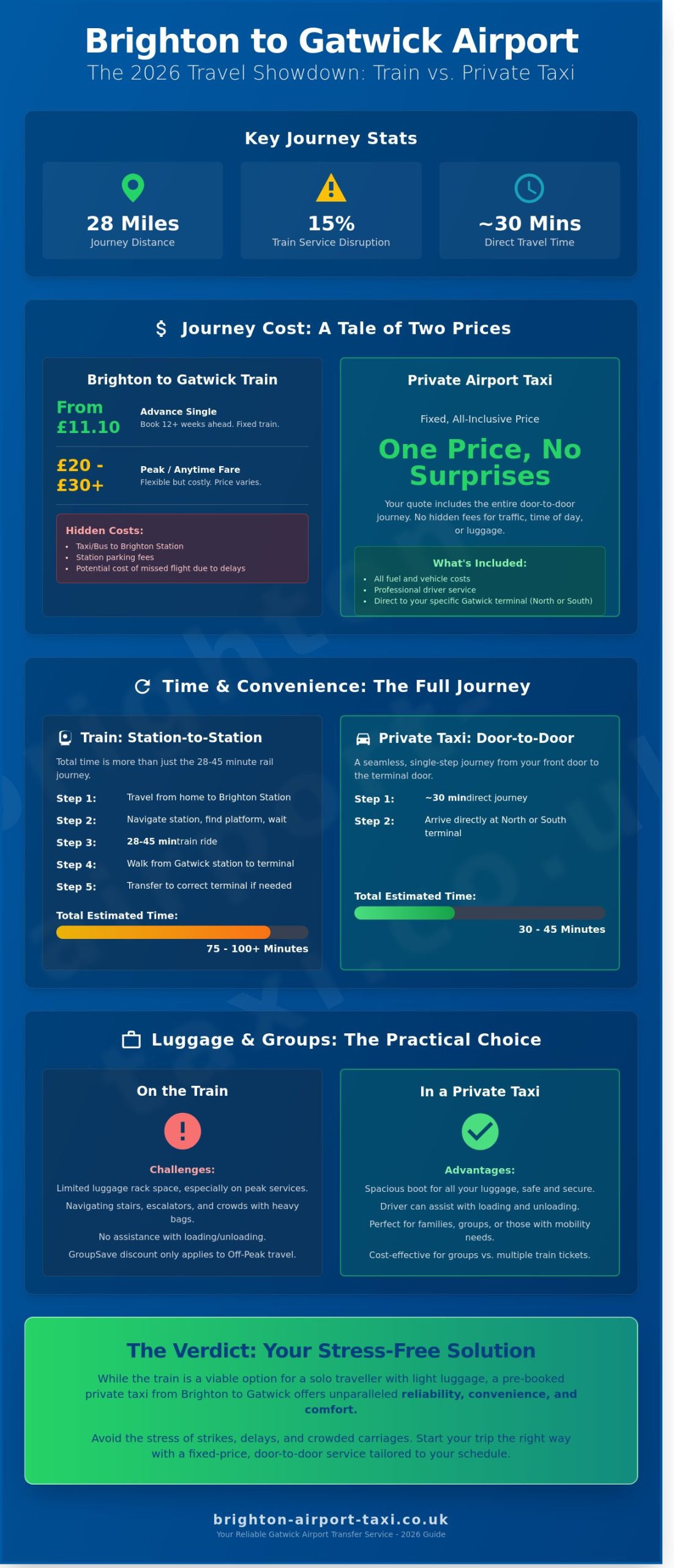
While a single ticket for the brighton to gatwick train might appear cost-effective at approximately £14.50, the financial benefit often disappears for groups or families. A family of four can expect to pay over £45 for a standard off-peak journey. This figure doesn’t include the hidden costs of reaching the station. A local taxi to Brighton Station typically adds £10 to £15 to your total, while station parking can cost £18.20 per day based on 2024 Southern Rail rates. Our fixed-price transfers remove these variables, offering a transparent alternative with no surprise charges.
Comfort is a primary differentiator. Commuter carriages on the Brighton line are frequently overcrowded, especially during the morning peak between 07:00 and 09:00. You might spend your 30-minute journey standing in a cramped aisle with little room for personal space. A private executive car offers a quiet, temperature-controlled environment. You can make business calls or relax in a leather seat, arriving at the Gatwick check-in desk refreshed rather than frazzled by public transport delays.
Time efficiency involves more than just the minutes spent on the tracks. You must factor in the “buffer time” required for navigating ticket barriers and platform changes. A door-to-door service eliminates these transitions. We monitor your flight and traffic conditions in real-time, ensuring your pickup is timed perfectly to meet your check-in window without the stress of missing a scheduled departure.
The Group Travel Equation
Managing a group on public transport is a logistical challenge. When four people travel together, the combined cost of rail tickets often exceeds the price of a private MPV. Splitting a £75 transfer fee between four colleagues results in a cost of just £18.75 each. This secures a direct, door-to-door service. You won’t have to worry about group members getting separated on busy platforms or missing a connection due to sudden cancellations on the Brighton line.
Luggage: The Great Decider
Handling heavy suitcases on the brighton to gatwick train is a significant physical struggle. Station lifts are often unreliable, and train luggage racks fill up within minutes of the service starting. A private transfer provides ample boot space for multiple large cases and cabin bags. Your professional driver handles all the lifting at both ends of the journey. This service ensures your belongings stay secure and your physical exertion is kept to an absolute minimum.
Logistics and Luggage: Making the Right Choice for Your Flight
Transporting heavy suitcases on a brighton to gatwick train requires more than just a valid ticket. It demands a clear understanding of the airport’s layout to avoid missing your check-in window. Gatwick Airport station is physically integrated into the South Terminal, meaning passengers flying with airlines like British Airways or Vueling enjoy a direct transition from the platform to the check-in desks. However, according to Gatwick’s 2025 operational data, roughly 42% of passengers depart from the North Terminal, which necessitates an extra leg of travel.
The “Flight Risk” factor is a genuine concern for rail travellers. Network Rail’s 2024 performance reports for the Brighton Main Line indicated that 3.8% of services faced significant delays or cancellations due to signalling issues or engineering works. If you’re travelling with multiple bags, navigating ticket barriers and crowded platforms during a service disruption adds immense physical strain. Most Southern and Thameslink trains offer dedicated luggage racks, but these fill up rapidly during peak commuter hours between 07:00 and 09:00. Travellers who have experienced last-minute rail cancellations often find that booking a taxi from Brighton to Gatwick provides the fixed-price certainty and real-time flight monitoring that the rail network simply cannot offer.
Navigating Gatwick Airport Station
Once you step off the train, you’ll face a 350-metre walk from the platform to the South Terminal departure gates. For those heading to the North Terminal, follow the signs to the automated shuttle. This free service operates 24 hours a day with a frequency of every 2 to 3 minutes. The journey between terminals takes exactly 2 minutes. Travellers with reduced mobility can find lifts on every platform; however, the walk from the station to the North Terminal shuttle can still take 10 minutes if you’re managing large items of luggage.
The Return Journey: Gatwick to Brighton
Landing after a long-haul flight changes the logistical perspective. After clearing customs and baggage reclaim, which can take up to 55 minutes during busy periods, the prospect of a brighton to gatwick train journey feels significantly more taxing. You’ll need to navigate the arrivals hall, locate the station, and potentially wait on a cold platform for the next available service. If your flight lands after midnight, train frequencies drop to once per hour, often involving slower services that stop at every station.
The exhaustion factor often makes the train a stressful end to a holiday. To avoid the hassle of dragging bags through the station and waiting for delayed services, many travellers prefer a more direct solution. You can book a professional airport transfer to ensure a driver is waiting for you in the arrivals hall, providing a seamless transition from the terminal to your front door in Brighton.
- South Terminal: 2-5 minute walk from the station platforms.
- North Terminal: Requires a 2-minute shuttle ride plus walking time.
- Accessibility: Lifts are available, but distances are significant.
- Luggage: Racks are limited on commuter-heavy Thameslink services.
Why a Private Transfer is the Reliable Alternative to the Rail Network
While the brighton to gatwick train remains a popular choice for many, the reality of rail travel in 2026 involves significant variables that can disrupt your journey. Network Rail has scheduled 14 major engineering weekends for the South East corridor this year. These works often lead to bus replacement services, which can easily double your travel time and involve multiple vehicle changes. A private transfer removes these logistical headaches entirely, providing a direct route regardless of the rail network’s status.
Fixed pricing is a cornerstone of our service. Unlike rail fares that fluctuate based on peak times or last-minute bookings, our quotes are transparent and locked in at the time of booking. If you face heavy traffic on the M23, your fare remains exactly what was quoted. This financial certainty is a significant advantage over ride-sharing apps that apply surge pricing or train tickets that can exceed £20 for a single peak-time journey. For a detailed breakdown of transparent pricing without hidden fees, see our comprehensive guide on taxi to gatwick price that covers all aspects of transfer costs.
Our flight monitoring technology ensures that your transport adapts to your actual arrival time. If your flight is delayed by two hours at the gate, your driver will adjust their arrival accordingly. You won’t need to worry about missing the last brighton to gatwick train or standing on a draughty platform at midnight. The door-to-door nature of our service provides the ultimate luxury, as we handle your luggage and drop you exactly where you need to be, avoiding the long walks between platforms and terminal entrances.
Reliability in an Uncertain Climate
Avoid the stress of being stranded by last-minute train cancellations, which affected 3.5% of South East rail services in 2025. A pre-booked 24/7 service offers a guarantee that public transport cannot match. You’ll benefit from a dedicated professional driver who manages the route and timing, allowing you to relax or catch up on emails. This is a stark contrast to the self-service nature of rail travel, where you’re responsible for navigating crowds and managing your own heavy suitcases through busy ticket barriers.
The Brighton Airport Taxis Advantage
Our commitment to punctuality is backed by a fleet of modern, licenced vehicles and local drivers who know the Sussex road network intimately. The ease of our online booking system means you can secure a fixed-fare transfer in under two minutes, providing peace of mind weeks before your trip. For a deeper look at how we compare to other options, see our Brighton to Gatwick Taxi: The Ultimate Guide to Stress-Free Transfers.
Secure Your Stress-Free Journey to Gatwick
While the brighton to gatwick train remains a frequent option, the 2026 travel landscape demands higher levels of predictability. Rail fares are subject to seasonal hikes, and navigating busy platforms with heavy luggage often adds physical strain to your trip. Choosing a private transfer eliminates the risks of unexpected rail cancellations or platform changes that can disrupt your schedule.
Brighton Airport Taxi provides a seamless alternative with 24/7 availability, perfect for those early 05:00 departures. Our service includes flight monitoring as standard, ensuring your driver is waiting even if your arrival is delayed. You’ll travel with professional, licenced drivers who use expert local knowledge to navigate the A23 efficiently. We prioritise your peace of mind by providing transparent, fixed pricing with no hidden fees.
Get a fixed-price quote for your Brighton to Gatwick transfer and experience a more reliable way to travel. We look forward to getting you to the terminal on time.
Frequently Asked Questions
How long is the train journey from Brighton to Gatwick Airport?
The brighton to gatwick train journey typically takes between 26 and 40 minutes depending on the service you choose. Southern and Thameslink services usually complete the trip in 33 minutes, while the Gatwick Express is the fastest option at 26 minutes. During peak hours or weekends, engineering works can extend travel times to over 50 minutes. It’s best to check the live National Rail timetable before you depart.
How much does a train ticket from Brighton to Gatwick cost?
An Anytime Day Single ticket for the brighton to gatwick train currently costs approximately £18.50 as of early 2026. You can find cheaper Off-Peak fares from £11.20 if you travel outside of rush hour. Booking in advance through the Southern Railway website or using a Railcard can reduce these costs by 34%. Groups of three or more often qualify for GroupSave discounts which significantly lower the individual price.
Are there direct trains from Brighton to Gatwick North Terminal?
No direct trains arrive at Gatwick North Terminal because the railway station is located within the South Terminal complex. All passengers arriving from Brighton will platform at the South Terminal. You must take the free inter-terminal shuttle to reach the North Terminal. This automated transit service runs every few minutes and takes roughly two minutes to travel between the two buildings.
What is the first train from Brighton to Gatwick in the morning?
The first direct train from Brighton to Gatwick departs at 03:51 on weekdays. On Saturdays, the initial service leaves at 03:53, while Sunday services start slightly later at 04:05. These early morning Thameslink services are essential for passengers catching flights before 07:00. For even earlier departures, a pre-booked airport transfer offers a more reliable door-to-door alternative to ensure you arrive on time.
Is it cheaper to take the train or a taxi for a family of four?
A private airport transfer is often more cost-effective than the train for a family of four. Four adult Anytime tickets cost £74, whereas our fixed-price family transfers start from £65. Choosing a professional taxi service eliminates the stress of carrying heavy luggage through busy stations. It also removes the £16.00 average cost of getting your family from your home to Brighton station.
Can I use my Oyster card on the train from Brighton to Gatwick?
You cannot use an Oyster card for the journey from Brighton to Gatwick Airport. While Oyster cards are valid between London and Gatwick, the system doesn’t extend south to Brighton. You should use a contactless bank card or a mobile payment device instead. This provides the same pay as you go convenience and ensures you pay the lowest available daily fare without needing a paper ticket.
What happens if my train is cancelled due to a strike?
If a strike cancels your service, you’re entitled to a full refund from the original ticket retailer. National Rail policy typically allows passengers to use strike-affected tickets on the day before or up to two days after the industrial action. In 2025, over 20 strike days impacted Southern and Thameslink routes. We recommend booking a licenced private hire vehicle during these periods to ensure you don’t miss your flight.
How do I get to Gatwick North Terminal from the train station?
You reach the North Terminal by taking the free monorail shuttle located on the upper level of the South Terminal. Follow the clear North Terminal signs after exiting the station barriers. The shuttle operates 24 hours a day with a frequency of every few minutes. The total transit time is approximately two minutes, but you should allow 15 minutes for walking and potential wait times.